

Izzy’s May 2025 Report
Izzy’s May 2025 Report
After months of preparation and anticipation, and a long journey, we finally arrived in Lira. Arriving at the Lira Regional Referral Hospital (LRRH) the next day, and having the tour around was not what I anticipated. At first glance, the hospital seemed more advanced than expected, with a haemodialysis unit, clinic rooms above the emergency department and ventilators in the ICU. However, this perception was quickly proven otherwise.
Some important things I noted from LRRH include:
Lack of resources:
This was expected; however, lacking ECG machines, glucometer strips, nebulisers, etc., are all small things that make a huge impact on someone’s health and treatment.
The ventilators were sitting there collecting dust, and when trying to switch them on, they did not work and required medical air, which the hospital didn’t even have! Additionally, when questioning the ICU nurses on if they used them, they didn’t even know what they were.
Difference in staffing template:
There was a huge number of student nurses/midwives and interns; however, most were standing there without direction and from this, missing vital learning opportunities. However, there was a finite number of nurses on shift to learn from, with the intensive care unit (5 haemodialysis beds and 4 critical care beds) having 1 trained nurse, 0-3 volunteers and 0-5 student nurses, and NO doctors present. If medical attention was required, it seemed to take multiple phone calls and time. This inevitably led to the unit being nurse-led, without SOPs to follow, leaving vast room for undereducated clinical decisions and mistakes. The nurses were aware of this and how dangerous it could be; however, they struggled to find an alternative (more on this later).
Great morale and work ethic:
I could continue pointing out things I noticed around LRRH that differ from our current practice; however, the one thing that was prevalent throughout LRRH was the want and passion from nurses and doctors to provide the best care they can. With volunteers turning up 5 days a week, not getting paid or a degree for their presence, and still turning up with a smile on their face. Now this was truly inspiring.
Diving deeper into the ICU:
My focus this trip was on the ICU. As stated earlier, this was split into both a haemodialysis unit and a critical care unit.
Critical Care Unit:
This unit was nearly always 75% empty, even with dozens of patients hospital-wide that would qualify for an ICU bed. There were minimal differences between this unit and a ward; there wasn’t even a working defibrillator! This area seemed neglected compared to the haemodialysis unit next door, which took up most of the nurses’ time.
Haemodialysis unit:
A highly demanded haemodialysis unit, where patients would come from all over the country for their regular or emergency dialysis. The nurses seemed to be very knowledgeable about how the machines worked and ways to troubleshoot them. However, it became clear quickly that the nurses had little understanding of how to troubleshoot a deteriorating patient on the filter, or even in general,
I noticed a patient awaiting haemodialysis having ongoing seizure activity (at least 10 mins) and 2 volunteers watching her, unsure what to do. The patient had been hyperglycaemic, and 16 units of insulin had been administered through mixed methods (IV and IM). Lottie, Emma and I took this moment for bedside teaching, and taught airway manoeuvres, seizure and blood glucose management, vital sign monitoring and escalation of care. Unfortunately, the patient died in the early hours of the morning. There was no structure on how to deal with this situation for the nurses, and no medical provider guidance. There was no ‘team leader’, no direction of care and a lack of education on how to deal with emergencies. Upon a later conversation, it was clear that the nurses would not intervene past escalating to the doctor, who did not arrive until Lottie spoke to him on the phone. Witnessing this highlighted to us that direction and education on emergencies were critical for patient outcomes.
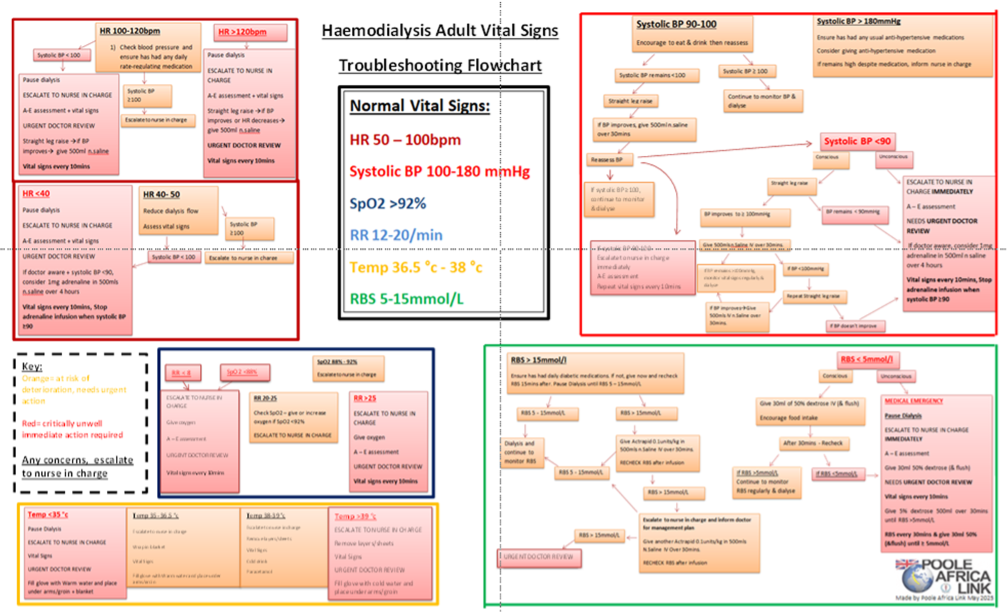
This is when Lottie, Emma and I designed a haemodialysis troubleshooting flowchart. We did this in partnership with a senior nurse, Betty, to ensure that we are adhering to their current routine and practices.
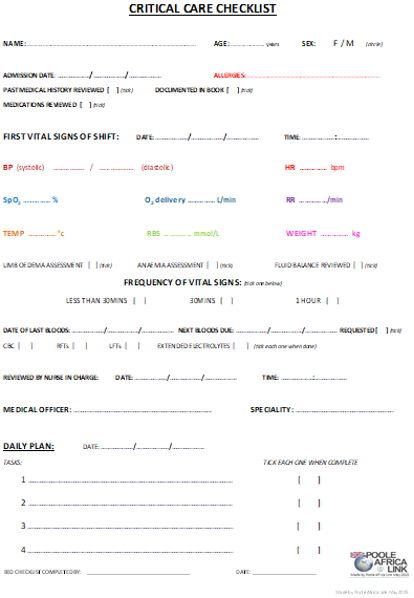
Additionally, asked Betty what she thought would be the most beneficial tool we could collaboratively create to help improve patient safety. She suggested a haemodialysis checklist to ensure the patient is safe to start dialysis. See below:
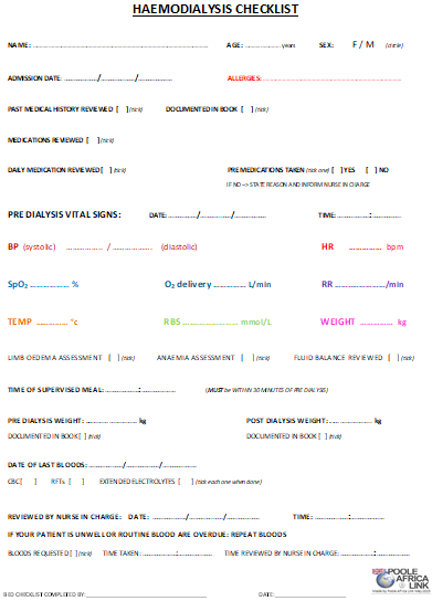
We also created a critical care checklist to draw attention towards regular vital signs, escalation, and collaborative plans of care.
These three tools seemed to be unanimously accepted and liked by staff, and with the adoption of these checklists, staff identified 2 patients who were unsafe for haemodialysis within the first hour of implementation! Compliance with these checklists and flowcharts was hard to measure, as they were so novel at the time of introducing them; however, we have had an update from Betty since, stating they are still in use. To ensure sustainability, we laminated A3 versions and tied them onto the ends of the bed, so they can be wiped clean for each patient.
Furthermore, another skill we identified that was lacking in emergencies was delegating roles. We found one nurse would try to do everything, whilst others stood and watched. So, to combat this, we introduced emergency roles that will be delegated at shift handover.
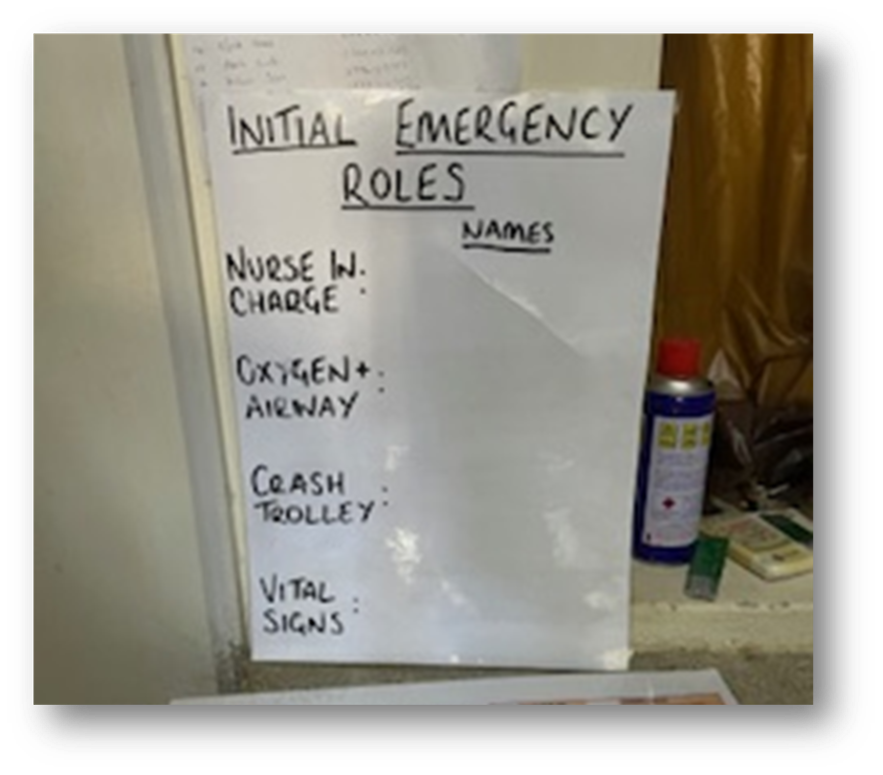
As well as introducing these tools, we also provided bedside and ad hoc teaching to the critical care staff, including A-E assessments, management of a deteriorating patient via simulations, the importance of vital sign monitoring, and oxygen therapy.
Outside of critical care, we did a formal sepsis presentation to the labour and maternal ward MDT, and a day-long trauma course for staff. Gary and I also presented at the parliament meeting. We addressed what our team has achieved so far this trip, e.g. service improvement projects and education, and also stated some observations we had made. These included a lack of equipment maintenance and supply, difficulty getting help in an emergency, and even providing a shower facility and gowns for the maternity ward to try to reduce sepsis. This sparked a significant conversation among staff members and appeared to have a positive outcome. Of course, we finished with what we had learned from them, which is a rather long list, and we received three ‘passion for excellence’.
At the University Hospital, we focused on structured lectures for the students, including sepsis, A-E assessments, neonatal resuscitation and trauma management. This was well received when delivered successfully; however, after formally arranging timings and year groups to teach, we consistently found that many did not know about the lectures and/or the room was in use. This resulted in us losing an hour or so to adjust to these issues, making it not a good use of our small amount of time in Lira.
Overall, this trip was eye-opening for me and to the privileges of life in the UK and the NHS. Seeing the way the staff and families adapt and overcome constant challenges whilst having a smile on their face was inspiring, and I hope to adopt this attitude in life. Not once did I hear a single moan or complaint, even when a family had not eaten for 5 days to afford their son’s treatment. And of course, the team was just incredible. The balance of checking on each other after difficult days, debriefs, but also laughter and positivity, made this team truly special.