

Breast disease capacity strengthening in Northern Uganda.
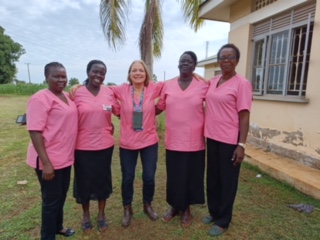
In the rural north of Uganda a woman with breast cancer accepts she will die in pain. They present so late. We are encouraging this community to come forwards with earlier lumps so they have a chance of surviving., and establishing a free patient treatment pathway for them.
We have set up a full local breast team and trained 6 rural midwifes as qualified breast nurses in level 4 clinics in the Lira district rural community. They triage the women – offering examination , ultrasound and simple needle tests near their villages. They also treat breast abscesses etc and reassure benign breast conditions. Any suspicious lumps are referred on to lira town where other team members do a biopsy and detailed ultrasound scan. (Mammo not available).
We have supplied digital ultrasound machines to 3 community clinics, and 2 machines to the university hospital, along with setting up telemedicine cytology.
Women who have a biopsy have this processed in Kampala by the Uganda cancer institute (UCI). We then support the women’s transport and stay at the UCI in Kampala (who we work closely with) in Kampala for chemo/radio and surgery.
The UCI are setting up a cancer hub up north and we are buying a vehicle for patient transport . This is supported by local income generating activities we have also set up.
The next phase is to support a small in-town breast one stop clinic, starting small and building up as much as possible over the years.
So far the local team have assessed over 1200 women and got 20 cancers treated. Sadly 2 have died – but at least pain free and with compassionate care, and the others have got much better.
Dr Judy Mella.
Breast surgeon
Anti microbial project
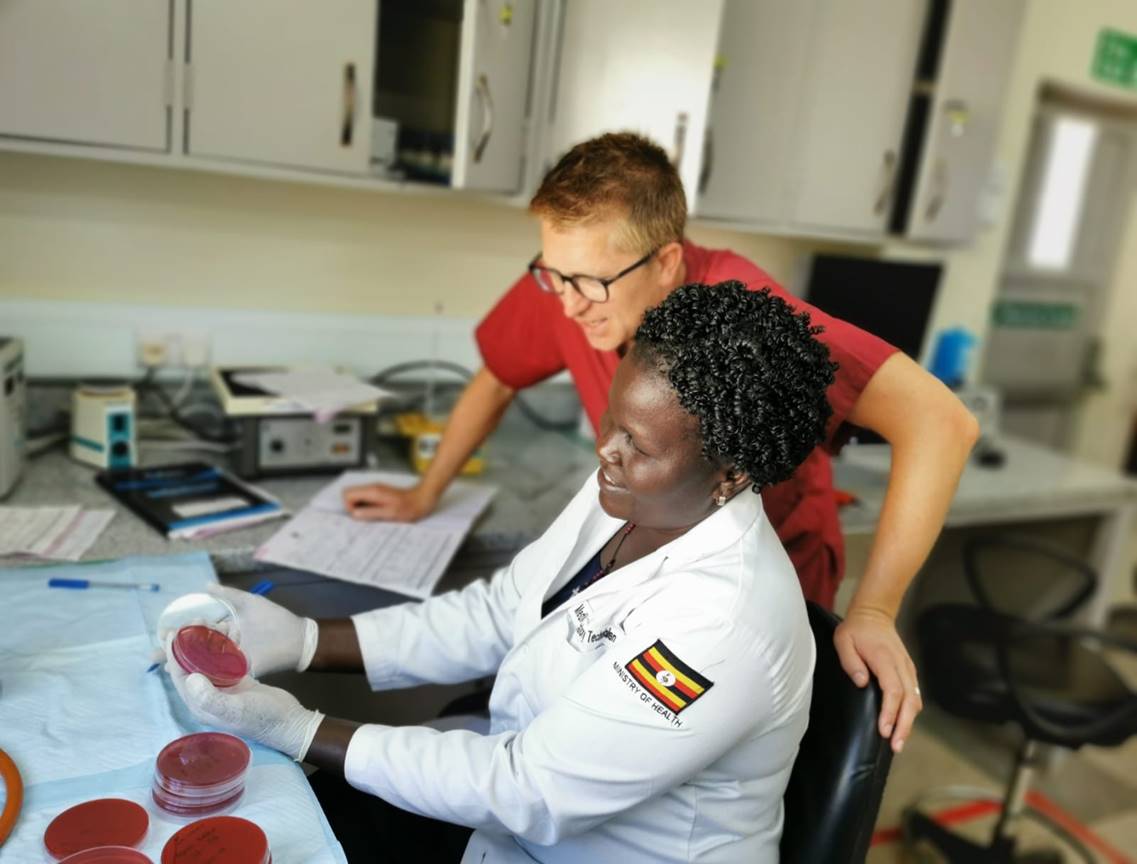
Dr Pasco Hearn has obtained £65,000 for a project called The Commonwealth Partnerships for Antimicrobial Stewardship (CwPAMS2) – from a fund aimed at healthcare partnerships. Funding comes from Tropical Health Education Trust (THET) and the Commonwealth Pharmacists’ Association (CPA). The project is called CWPAMS2
Similar work is going on all over the world, funded by the UK’s Fleming Fund. Money is going into regional builds too e.g. Fleming Fund has contributed towards a new laboratory build at LRRH.
Pasco’s project is for 21 months. It covers:
1. Microbiology activities:
Capacity building in the Microbiology lab; internal quality assurance programme, improving reliability and utility of results along with improved engagement with clinicians; robust local antibiogram data feeding into national database; activities that are in line with the national antimicrobial resistance action plan.
2. Antimicrobial stewardship activities:
Capacity building in the pharmacy department; supporting a fellowship in leadership training; a teaching course for clinicians delivered with a ‘training the trainer’ approach to improve sustainability; creation of antimicrobial stewardship guardians on the wards; point prevalence surveys that feed into WHO supported activities; introduction of a locally appropriate electronic antimicrobial guideline app.
3. Infection control activities:
Teaching course for clinicians delivered with a ‘training the trainer’ approach to improve sustainability; creation of IPC Champions on the ward; handwashing/PPE audits and surgical site infection screening activities to monitor progress.
It will include funding for a gender equality and social inclusion (GESI) action plan and a visit from a behavioural psychologist to look at ways in which to embed behavioural change within the specific cultural context of Northern Uganda.
Pasco is planning on three team visits to Lira, but numbers will depend on the project budget, which will need recalibrating as the project progresses.
Pasco’s role is: Consultant Microbiologist, Head of Microbiology Department at UHD Clinical Lead for OPAT Services at UHD, Transformation Lead for Microbiology at One Dorset Pathology.