

October ’24 Lindsey’s Report

October ’24 Lindsey’s Report
Reflections of my time in Uganda:
I was keen to join the Poole Africa Links trip to Uganda this year after hearing a presentation from Dr Pasco Hearn to the staff in Microbiology in UHD about the iAIMS project he had set up with Dr Francis Kiweewa in Uganda. I felt I was ready for a challenge and that I was more than capable of helping the project in the Microbiology Work stream. This was my first trip to anywhere in Africa, and I can truly say I have fallen in love with Uganda and the people I met. They all made me feel very welcome and were keen to learn from us, as I was from them.
Aims:
My aims for the trip were to observe the daily working in the microbiology laboratory, see the workload, workflow and the practicalities of Microbiology in LRRH. It would include involvement in the Internal Quality Control and help the staff produce a report enabling measurement of the success of the IQA they are running. I would share any ideas to improve the management of the workflow, do a gap analysis on the SOPs that they had, provide guidance on mixed cultures and how to best report and provide training of the sensitivity testing through a workshop. On reflection of my time in the laboratory I feel that I achieved my objectives and could see the difference made from when I first arrived to when I left.
In The Laboratory
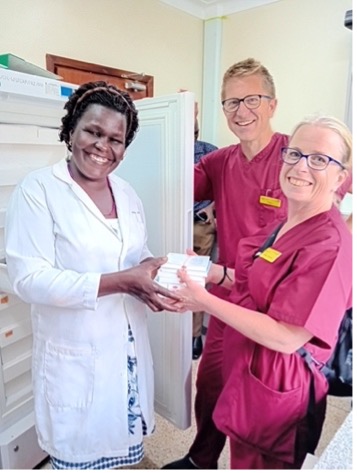
On our arrival Pasco and I presented them with some gifts which we believed would help them in their daily working lives. A couple of new antibiotic plunger, 2000 plastic 10ul loops, three 0.5 MacFarland standards and a stock of needed antibiotic discs for antimicrobial sensitivity testing. All these items would aid to produce a better quality of results
.
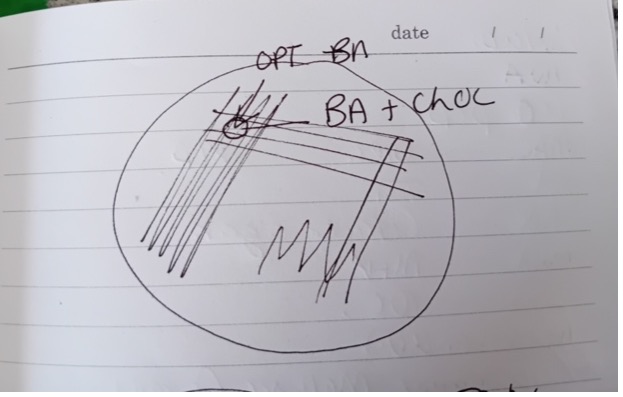
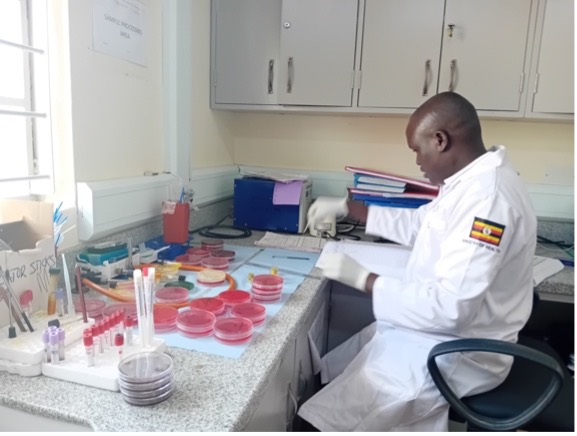
I spent the first 2 days observing the work processes, reading the cultures and how they reported the results. During this time, I talked to them about placing the plates into order prior to starting as they were spending a lot of time for each patient locating the plates from the random order they had them on the bench. When we were reading the sputum cultures, I observed how they were not screening for Haemophilus sp. as we do, and we talked about the plates they were using and why. They had no SOP for sputum, so this became a priority for me to write one for them. Explaining how time could be saved using a couple to antibiotic discs on the primary culture plates to screen out the Strep. pneumoniae and Haemophilus sp. I drew diagrams to aid the teaching which they were very interested in.
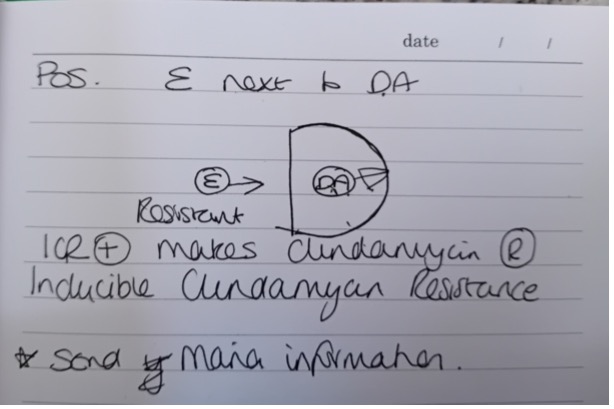
In the UK we screen for Inducible Clindamycin Resistance in Staphylococci and Streptococci. The team in Uganda were not aware of this as the discs were randomly placed within the plungers. I had a discussion explaining this and the importance of the result and sent Maria some information about this and explained keeping the discs in the same order would also help. This is where the plungers we gave them will come into their own.
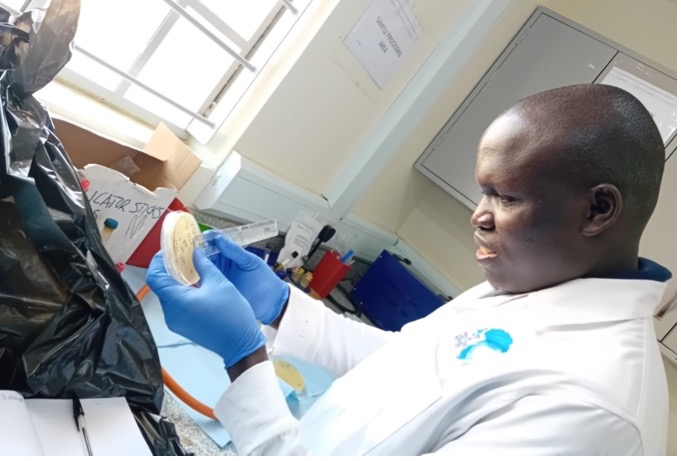
During the workshop on sensitivity testing I advised them on the correct way of reading of the sensitivity plates. A dark background aids the correct measurement of zones and using a standardized concentration of 0.5 MacFarland would provide consistency in their zone sizes. I also noticed a lot of time was spent looking up the results each time in the CLSI book so whilst I was there, Maria and I created panels used for each organism with the zone sizes for the antibiotics they routinely use for a quick reference for them to use.
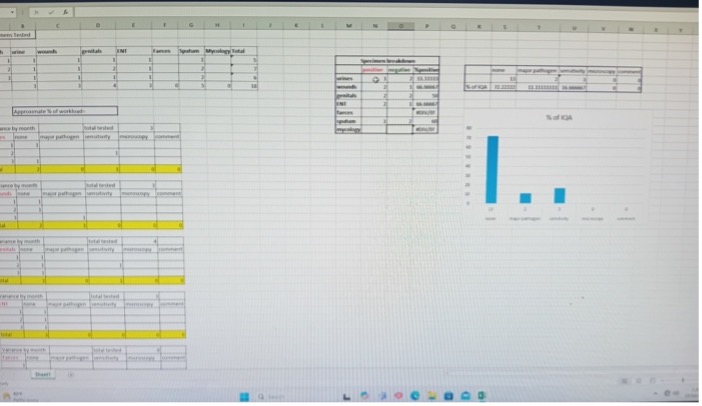
After the gap analysis of the SOPs they had, I spent time creating a SOP for their blood culture analyzers, sputum, method for the correct concentration of HCL, formats for the IQA reports and a format of Excel sheet with formulas present to create graphs of the issues found during the IQA testing.
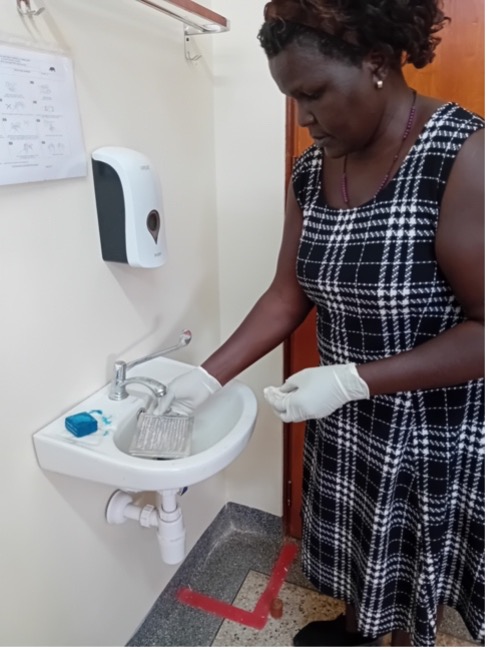
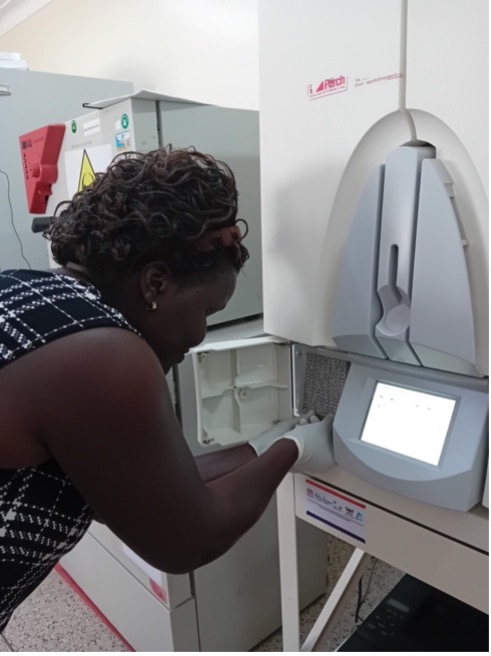
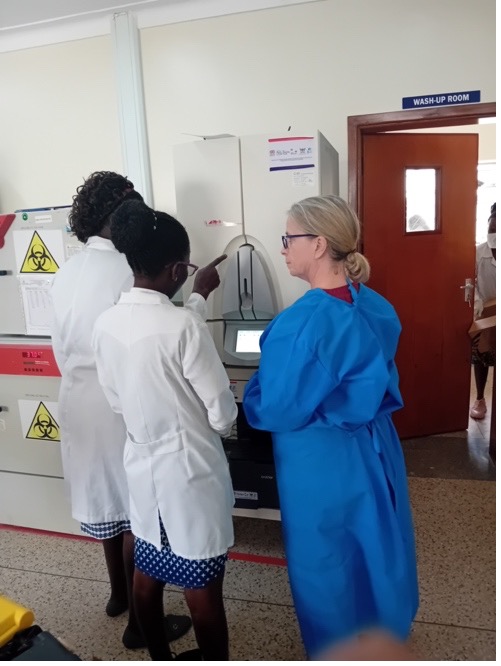
Going through the blood culture SOP I had created led to another workshop, demonstrating the daily maintenance of the machine and how to correct anonymous bottles placed on the machine. This would prevent bottles from being incubated at weekend in an incubator waiting to be incubated correctly in the blood culture analyzer.
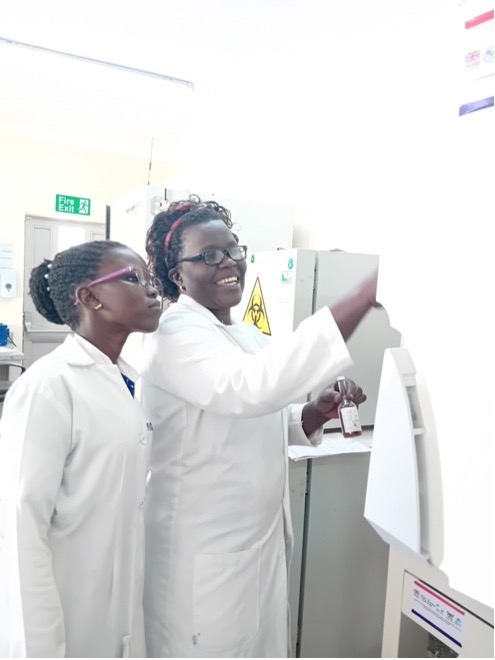
Improvements Noted by end of my visit:
I was so happy to notice by the end of my visit already some of the suggestions had been adopted. This made the time spent even more special, to feel like I had helped the people I had met and gotten to know, to produce quality results.
1.Ronald was reading the sensitivity plates using the blue of the box that he had until a black sheet could be located.
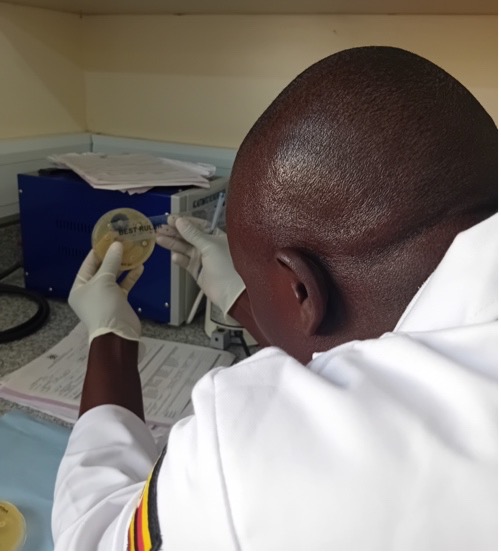
2.Hope had put up the sensitivities the previous day and confluent growth had been achieved with the 0.5 Macfarland Standard that we had gifted.
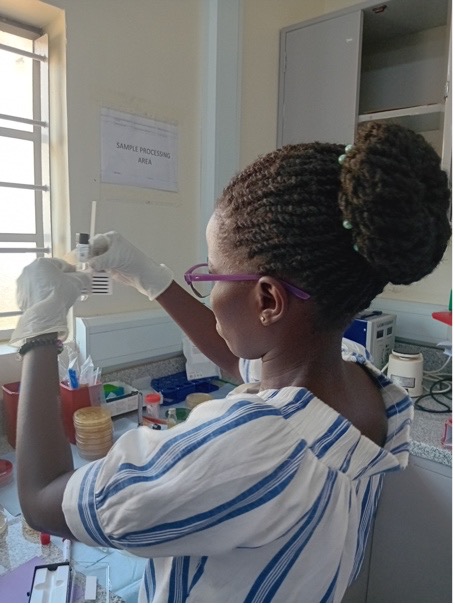
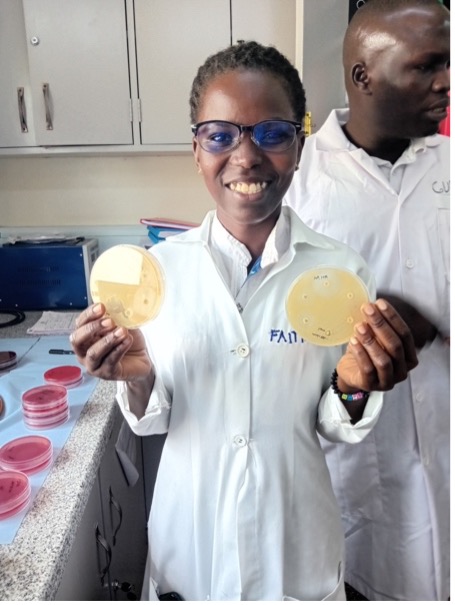
3.On arrival to the lab on the last day Ronald was already there and his plates were placed in order.
Closing Comments:
I thoroughly enjoyed the experience of working alongside the wonderful people in Uganda. They all made me very welcome and took me into their working lives with enthusiasm and warmth. I will never forget this trip, the opportunity to share my knowledge with the team in Microbiology and aid them to obtain guidance on improvements. The team I was with was supportive and I feel I have made some good friends. Outside of the project work the hotel was also friendly and on Independence Day a celebration was hosted with the Lango and Acholi Tribes performing tribal dances, which was such a special experience. The weekend trip to Murchison National Park was also a fantastic opportunity. We were so lucky to see a lioness up a tree sleeping and a family of Warthogs up close. I will be forever grateful to Poole Africa Link for letting me join their team and have this wonderful experience. I just hope that this will not be my last!