Improving breast symptom service in Lira region by specialist diagnostic training for community nurses/midwives
Report of outreach Ogur health centre IV October 4th/5th 2022.
The team were warmly welcomed by the local health team under the leadership of Geoffrey, whose team had mobilized the community to come to the outreach and also Dr Isaac, kindly providing us with use of three clinic rooms in the day theatre.
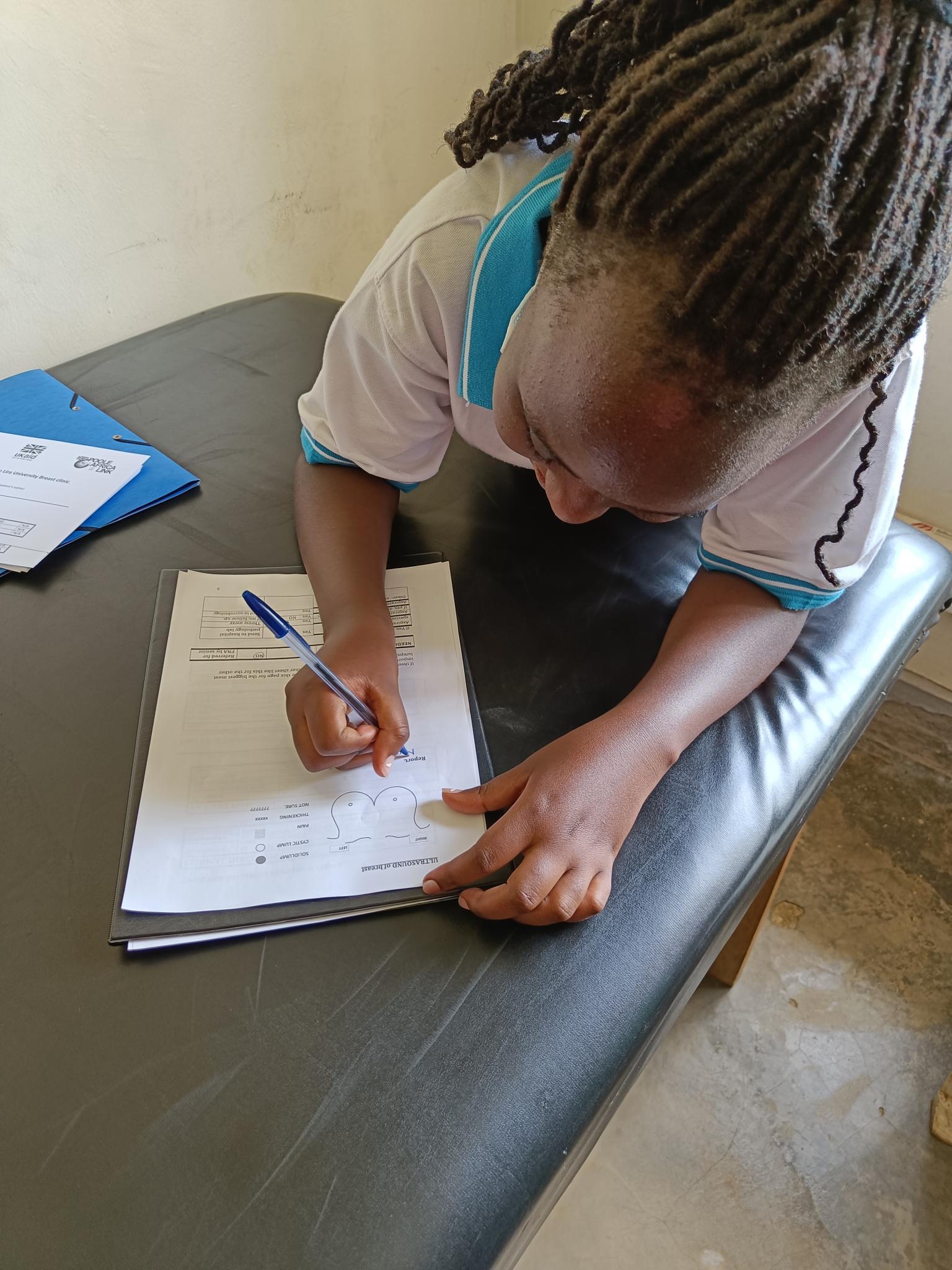
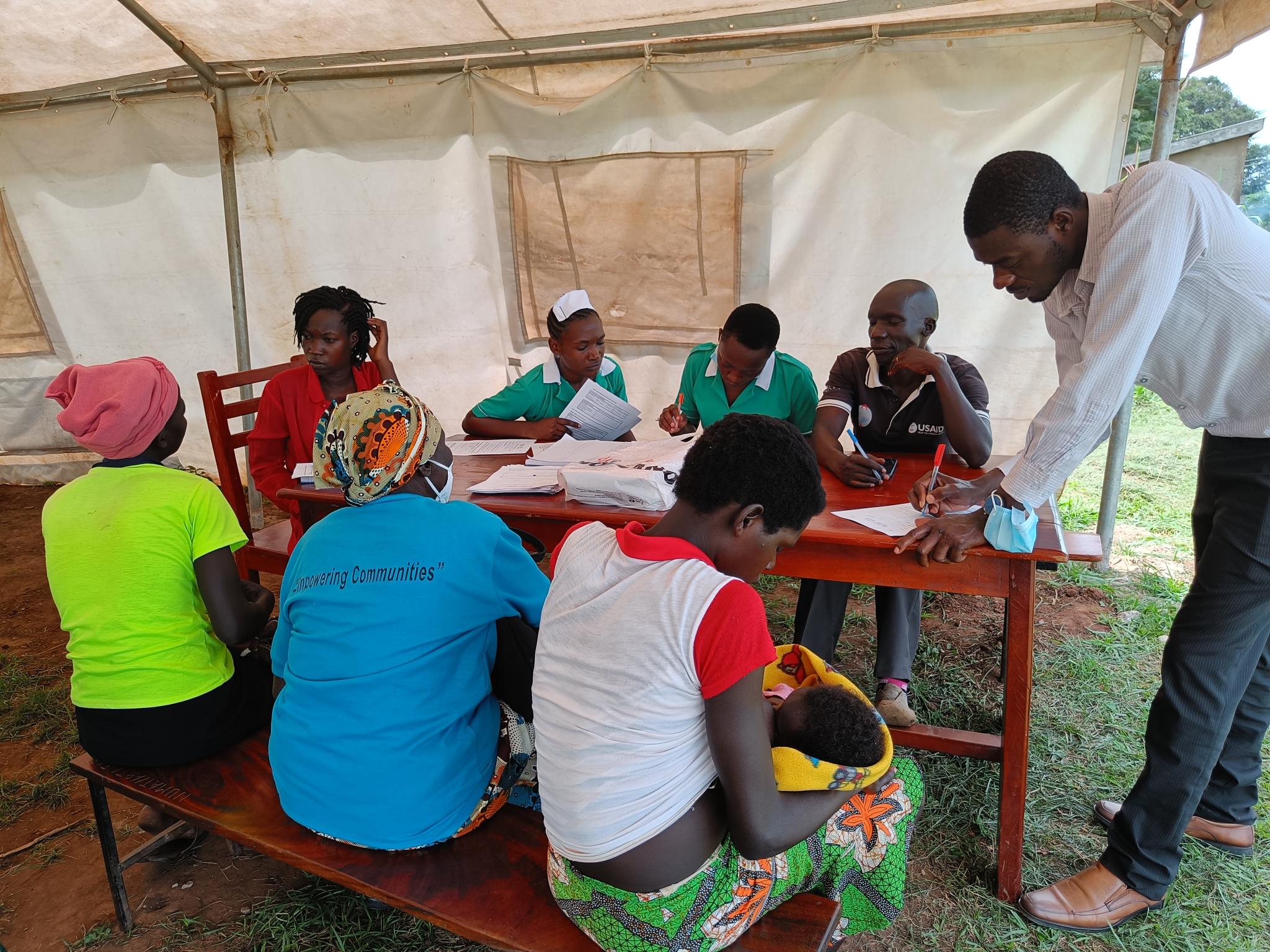
Women were already starting to gather on wooden benches under the gazebo whilst we set ourselves up. Six nursing students from Lira university and Lira school of nursing also joined us. Some helped Jacob, the laboratory technician with registering patients and taking their history, whilst others joined us in the clinic rooms to see patients.
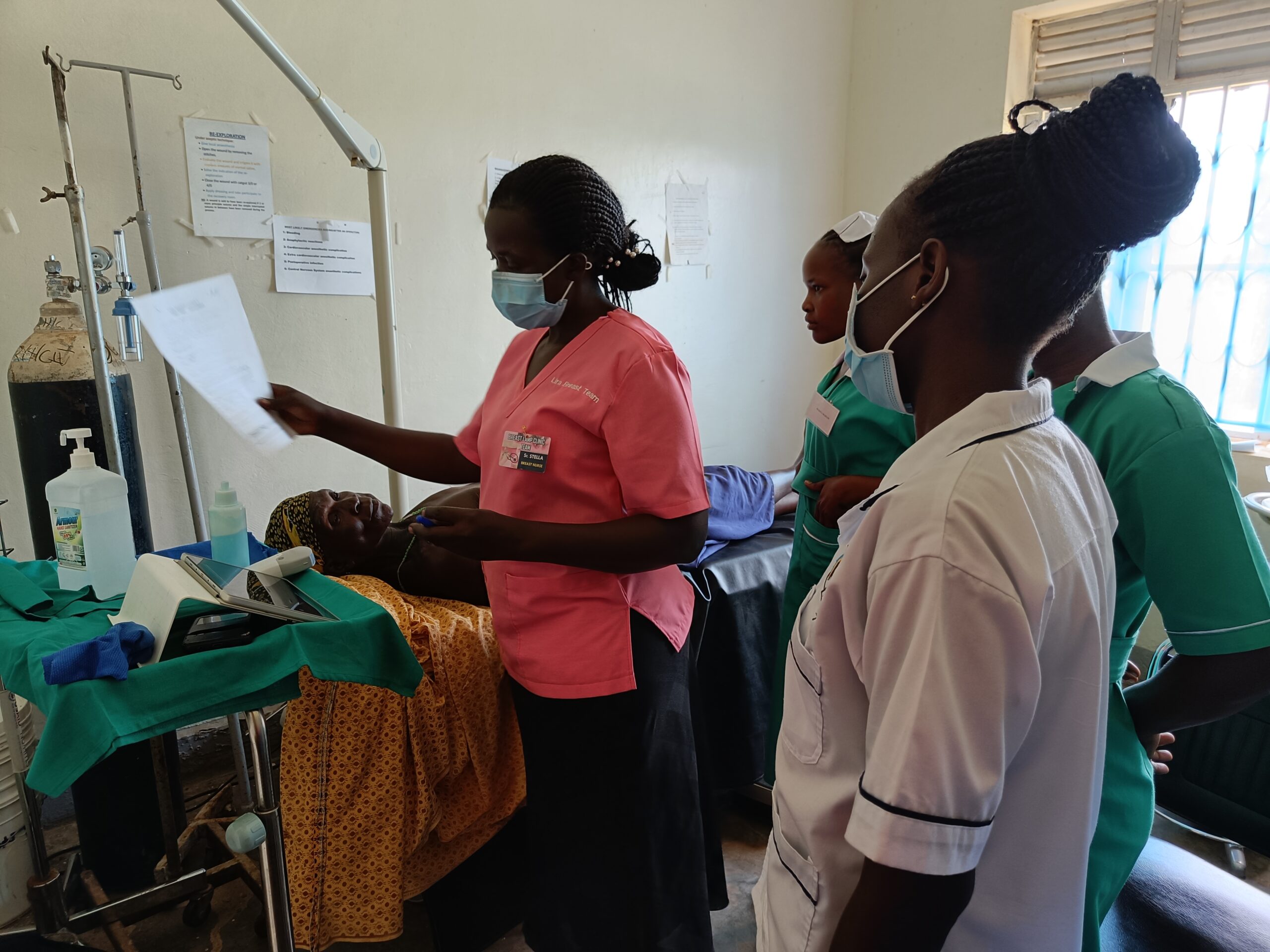
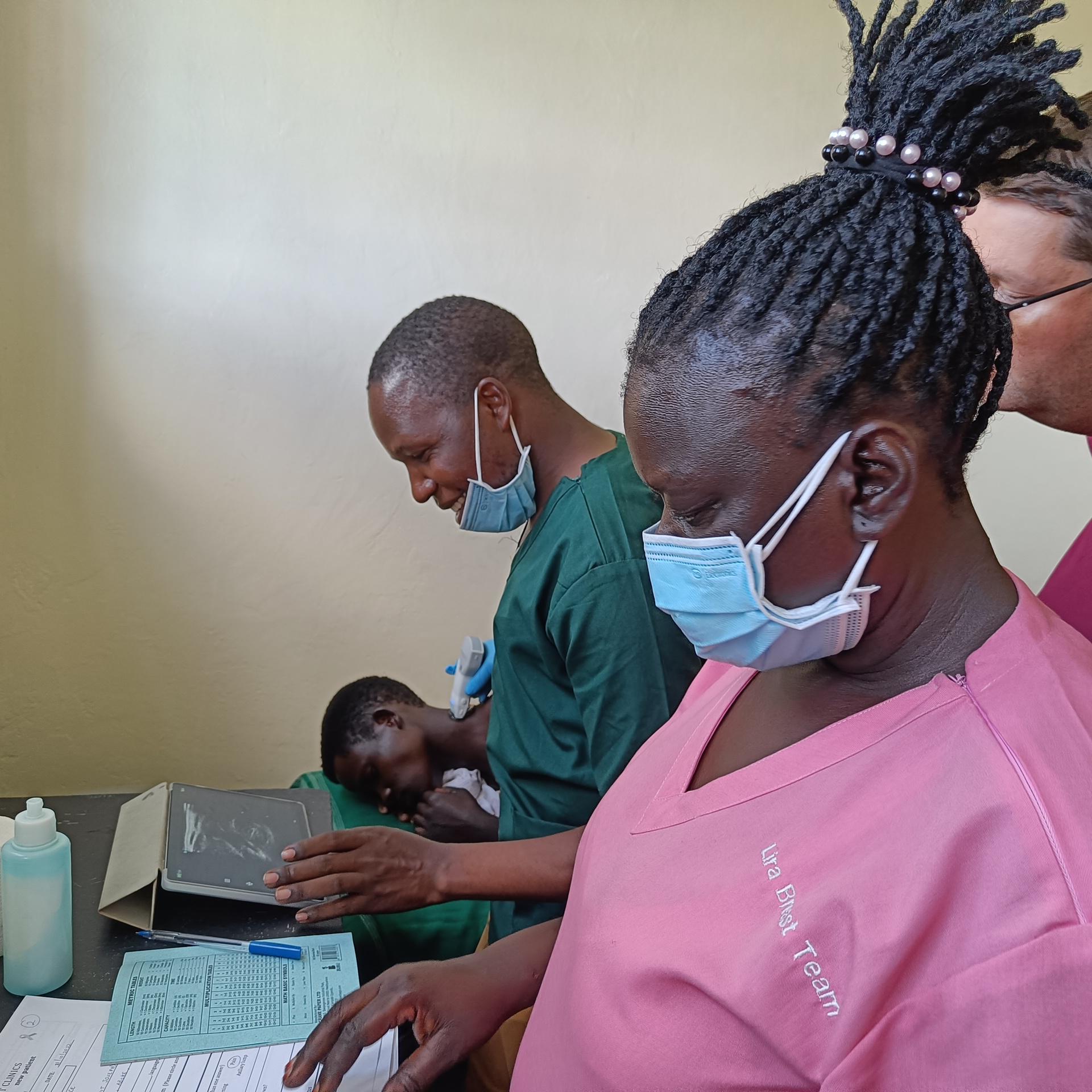
Clinic room 1 had Phyllis, the radiographer, Sr Harriet from Ogur, Sr Fiona from Amach, and a large group of students all keen to learn. Clinic room 2 had Dr Judy and Sr stella and 2 students – this also doubled up as the procedures room where Dr Judy was performing Fine needle Aspiration (FNA) and trucut gun core biopsies on patients who had lumps. Clinic room 3 had Mark, radiographer, and Sr Pamela from Aduku and 2 students. Gira Moses provided us with a welcome breakfast of African rosemary tea and chapatti to fuel us for the morning.
Once about 40 or so women had arrived in the gazebo tent, we introduced ourselves and talked to the women about breast cancer and the service we are setting up for them. We explained breast cancer is like a weed in the breast that starts as a small lump that needs removing early before it goes everywhere, but that most breast lumps are not cancer, which is why all breast lumps (gulugulu) should be checked out by Sr Harriet. We explained that we aren’t just a one-off clinic, and that Sr Harriet is now a permanent trained breast nurse who can assess breast lumps and perform ultrasound in this clinic ( and patients needing biopsies will need to go to see the surgeons in Lira). We also explained how the clinic is now linked to the radiology department by telemedicine as the ultrasound machines can send pictures online. The links extend to Kampala and UK, – so there is a wide connection network of which Ogur is part of, and the community is not forgotten.
Patient through put was good: – we had full corridors and managed to see at least 35 by lunch time. There was a significant amount of teaching during this time: in particular for the midwives learning ultrasound from the 2 radiographers. Most patients had normal breasts and could be reassured, this was crucial to learning, as identifying what is normal is essential before being able to understand disease.
Gira Moses then produced a very delicious lunch of rice potto, 2 stews, beans and **paste. These huge pans of food fed all the staff present quite comfortably. The water dispensing attachment for the large water bottles did a good job on its first test.
Day 2 was a similar set up to day 1 – with more patients. We also were able to demonstrate the ultrasound machine to Dr Isaac so he can also use it for other patients’ benefit, especially antenatal patients. This might be very important for antenatal bleeds to establish the cause by ultrasound without moving the patient. Phyllis was using both ends of the ultrasound probe, scanning not only breast patients but also at least 12 pregnant women.
We saw over the 2 days, 150 patients – 149 women and 1 male ( with gynecomastia). Of these many had innocent findings such as fibrocystic change, a few had fibroadenoma, and at least 3 had breast cancer. Our youngest patient was 8 years old- she had a chronic asceptic abscess which we drained and dressed.