Outreach report July 2022 Amach
Outreach report July 2022 Amach
There is something quite exciting and terrifying about an outreach clinic – especially when you haven’t done one before and honestly haven’t a clue what to expect.
Our breast team consisted of 5 breast nurses trained at the last visit, 2 radiographers, 1 psychologist, a lab technician, myself and the outreach co-ordinator, Cosmas. The latter had done an excellent job in alerting the community by networking with the big chief The honorable Freddie, the churches, radio stations and strategic posters announcing the outreach and its purpose.
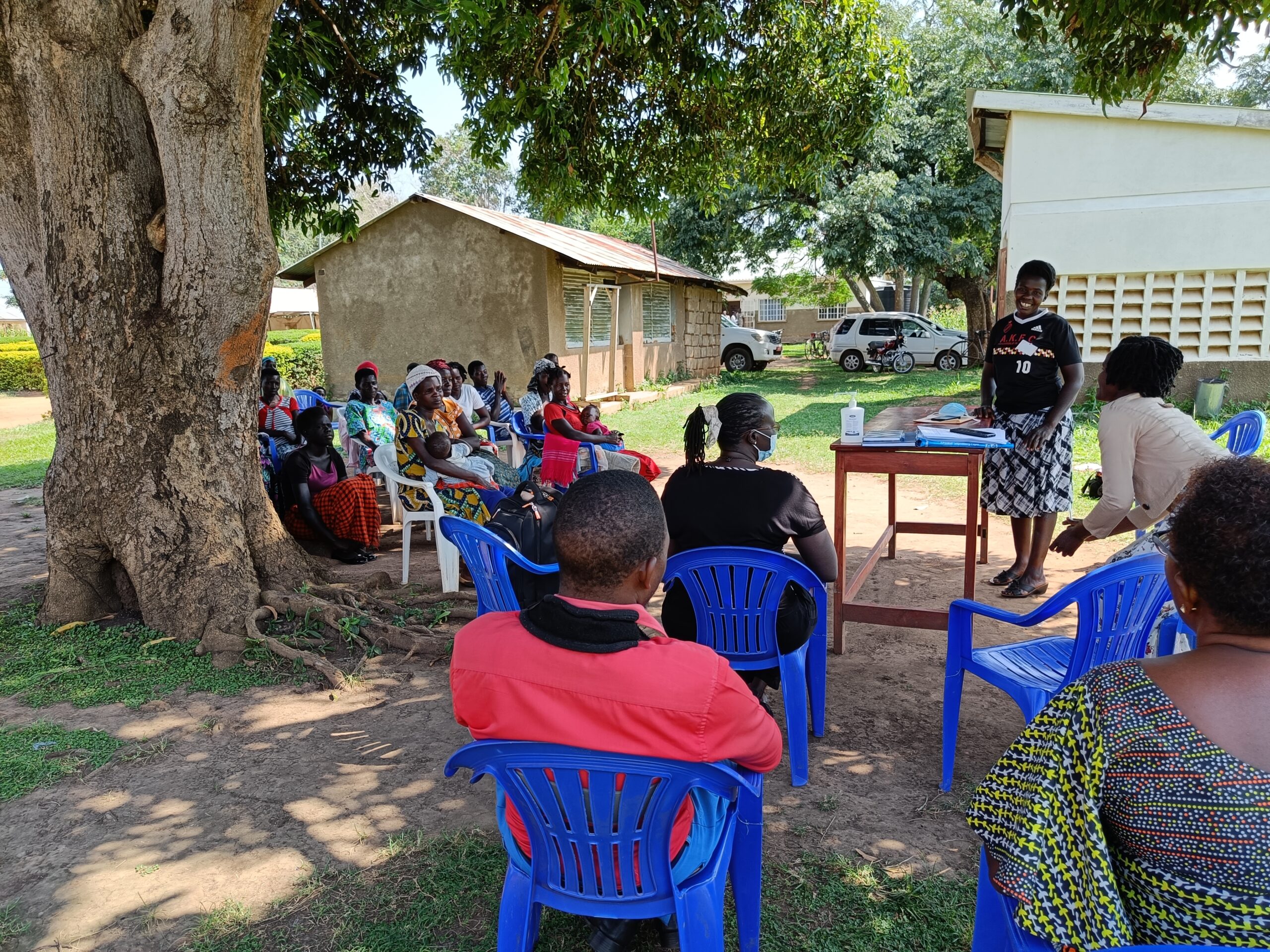
Amach is about 30 minutes drive along a dusty road south east of Lira, a level IV health care facility – running large outpatient department and having about 50 beds, 2 doctors and operating capacity. It is truly rural. Cosmas had organised the lead staff to set up 3 clinic rooms for us in outpatients, and our meeting place under the huge mango tree next to the sunflower field, where roosting birds, cockerels, stray dogs and cats all added to the background hum in the bright sunshine.
About 100 women, many with children, were there for us – patiently sitting on the grass. My relief was huge – I think we can manage that number between us!
We were introduced to the crowd by the lead clinic staff and I managed my sum total of 4 Lwo words to much laughter. Many of these women have come far to see us – hugely humbling.
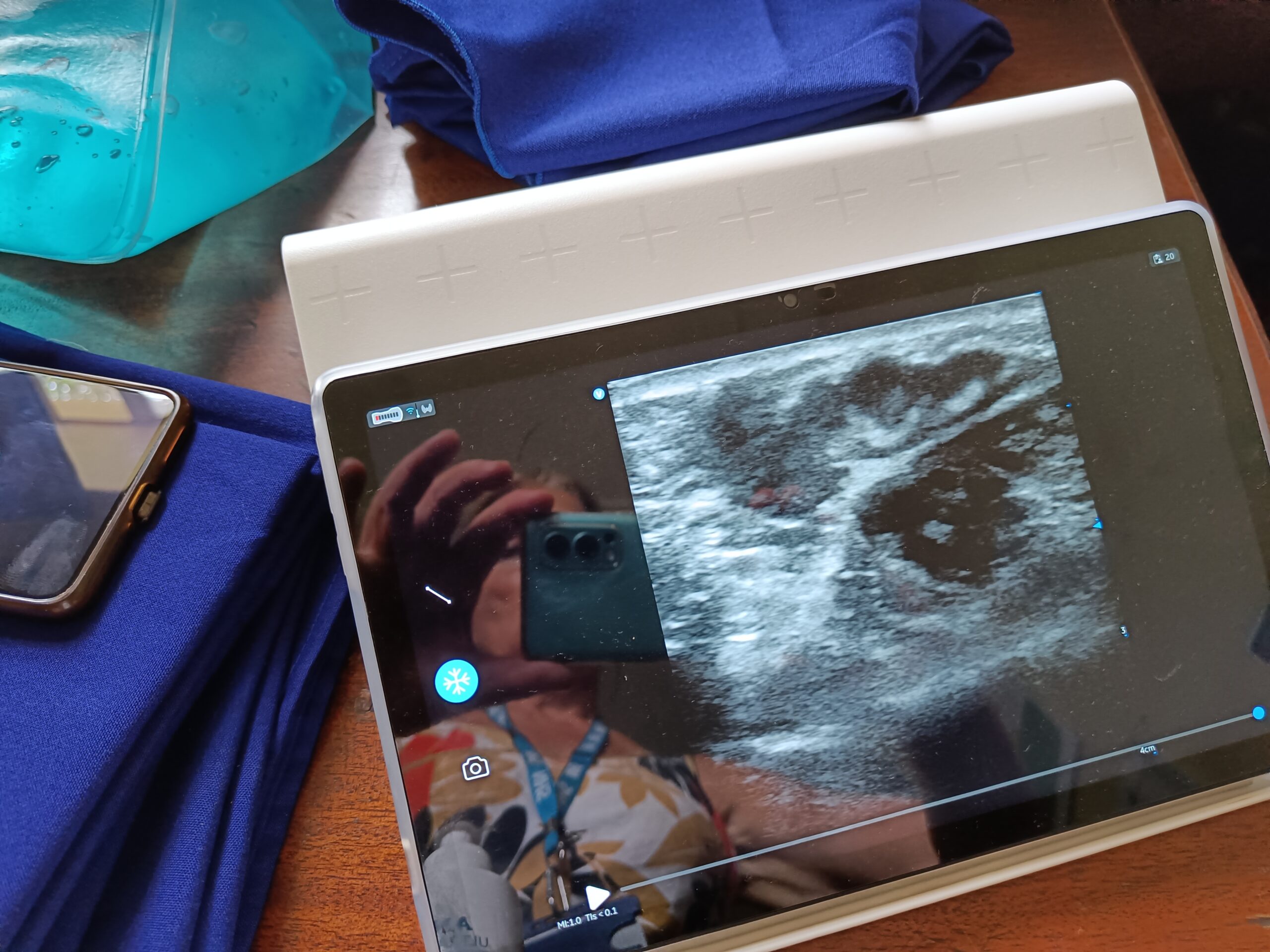
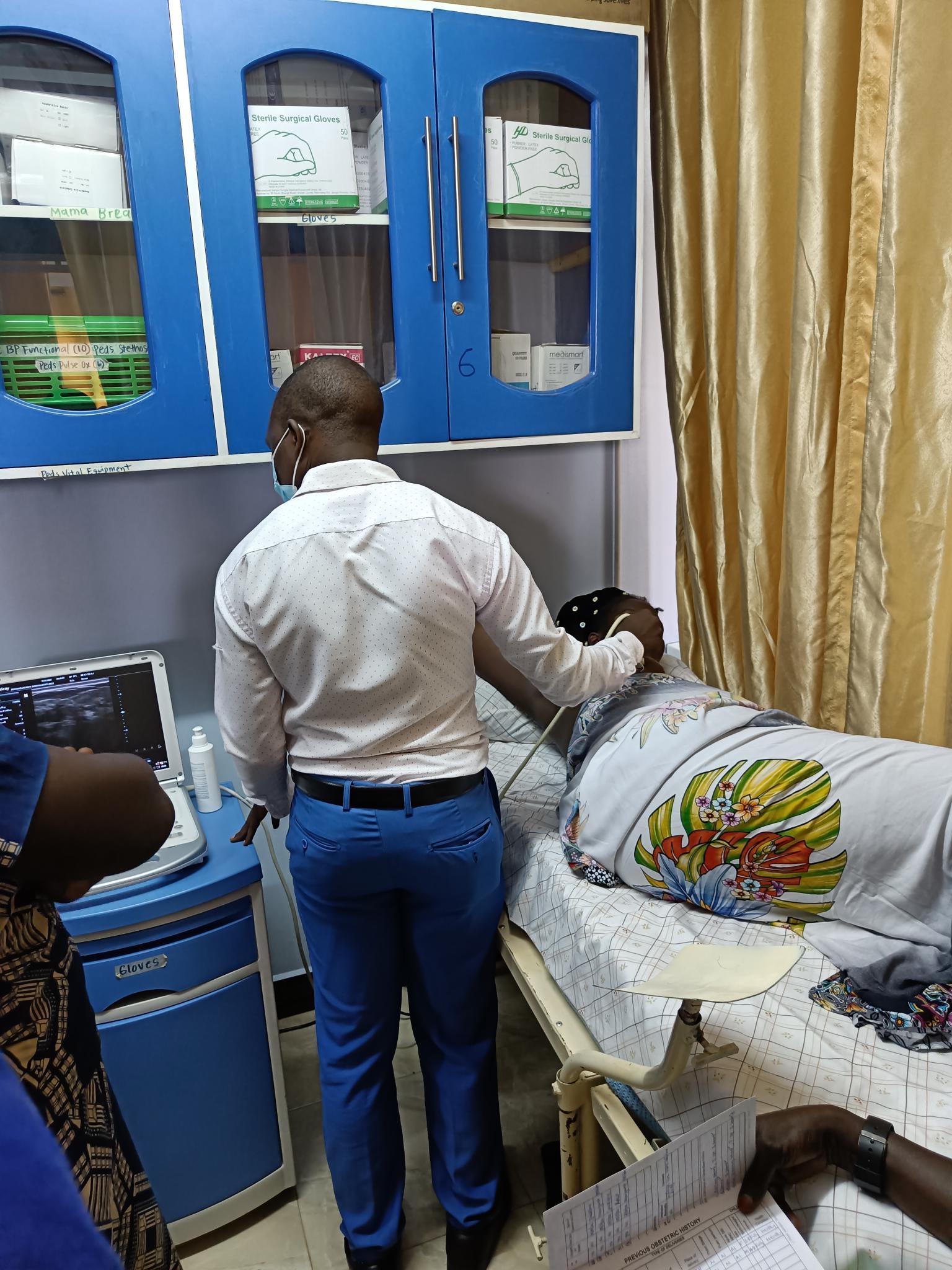
Each woman filled out a clinical form with her details at the triage desk. We subsequently used this point to take a brief history to be sure the women’s symptoms fitted with the clinic. Women then came inside to clinic room 1,2 or3. Each room had a radiographer, 2 nurses, and a GE vscan air hand held ultrasound machine. Whilst the women were waiting, we used the opportunity outside to discuss breast problems and teach them about breast cancer, and the difference early detection can make.
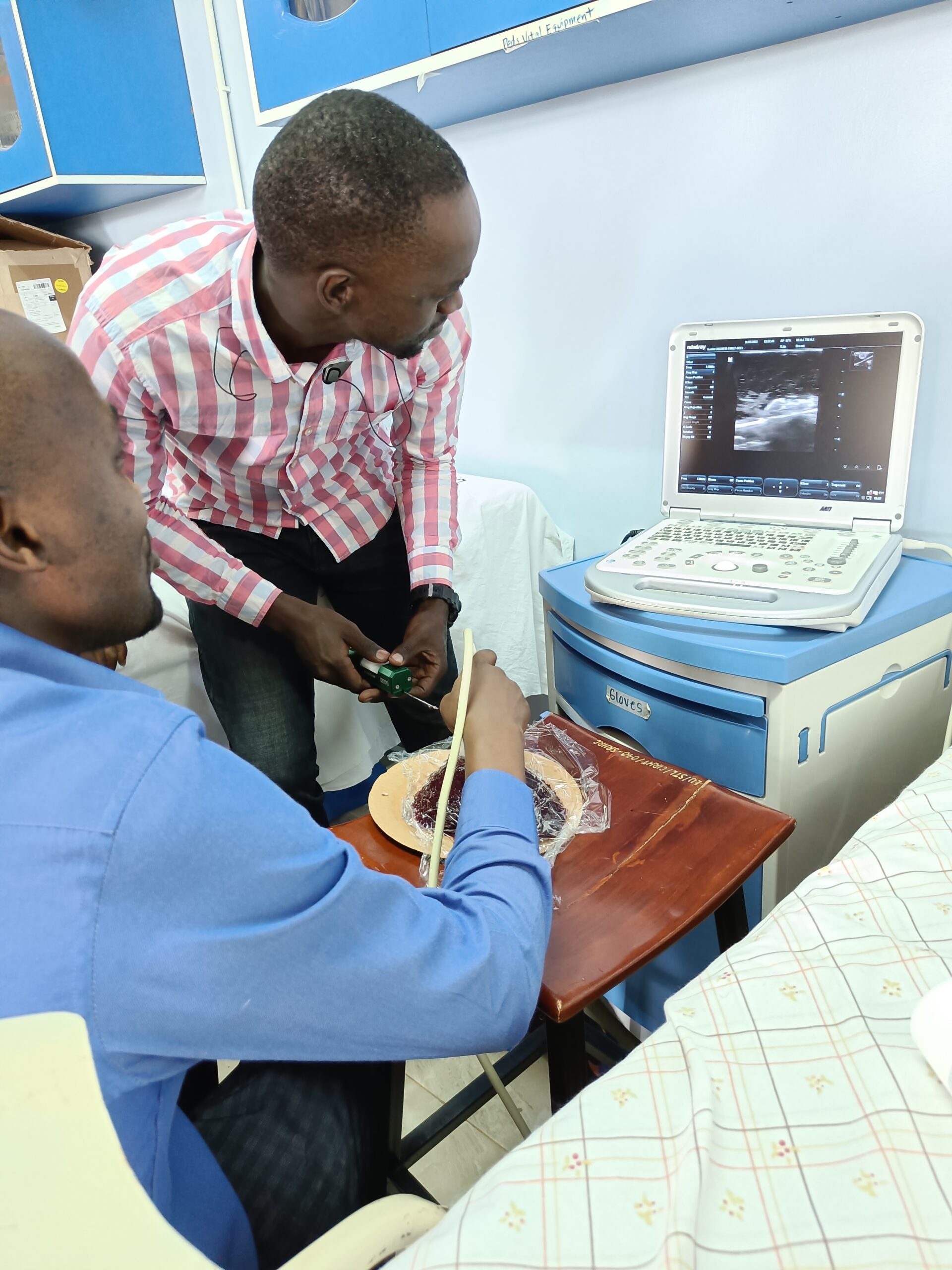
The clinic was not only assessing the patients – it was a teaching session. The radiographers were teaching the nurses to do the ultrasound and mentoring them through the cases. I was mostly based in one room as a “surrogate” radiographer but also teaching the clinical side and some of the interventions such as aspirating breast abscesses and teaching cytology sampling ( FNA).
Of the 135 women we saw over the 2 days – the vast majority just needed reassurance about their breast pain. There were 2 likely cancers, several benign lumps and several cases of mastitis and breast abscesses. These statistics fit with the expected numbers.
2 were referred to the hospital for core biopsy ( 2 likely cancers) . The 3 major abscesses were drained in the clinic and referred for hospital radiology follow up– the other infected cases were all treated here and for local follow up. The huge benefit is also for the benign breast lumps which, with ultrasound and a good cytology report will be saved expensive visits to the hospital and a likely operation.
This was also a great chance to cuddle the delightful sleeping babies whist the nurses examined the mothers!
Cosmas had also wheeled in the local caterer for a proper lunch of rice, posho ( maize flour porridge) beans chicken and beef. Absolutely essential- I think failure to provide this would cause a walk out….
All in all it was a very productive experience for all of us. Getting the message to the community is so important and really what the project is all about. Therefore, at the team brief, we decided, with lots of enthusiasm, it was important to do this at the other rural clinics as well – which we will plan for October. Meanwhile we will set up the first specialist breast clinic in the university next Tuesday.
Judy Mella
Surgeon